




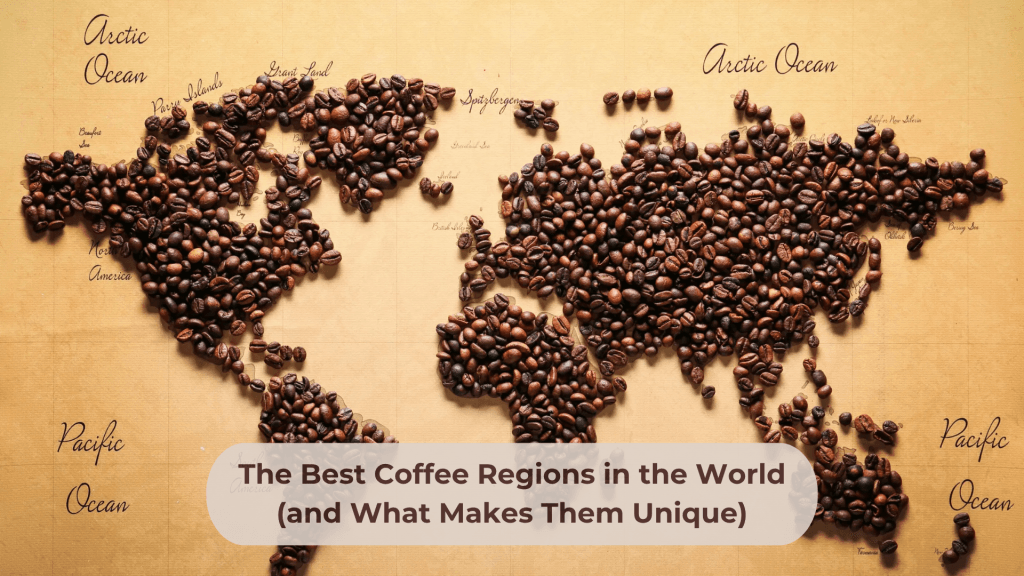
Coffee may be fruit, floral, nutty, chocolaty or extra bright! But what are the factors that account for those differences?
The solution begins long before the beans get to the roaster. Soil, variety and processing methods; climate and altitude all influence the characteristics that will be seen in the cup. That’s how coffee from various places can seem so entirely different, even if it is brewed in the same way.
The following are some of the world’s most renowned coffee-growing regions and their unique characteristics.
Ethiopia: Coffee’s Historic Home
Ethiopia has a special place in the coffee world. It is said to be the birthplace of the species Coffea arabica and has an extremely diversified coffee-production area. World Coffee Research reports that Ethiopia has almost one-fifth of the world’s coffee plantations.
Ethiopian coffees are known for their ‘floral, fruity and complex’ taste, with different regions and processing techniques offering a range of distinct characteristics.
Ethiopia is an interesting place to begin speciality coffee for those new to speciality coffee.
Colombia: Balanced and Versatile
Colombia is one of the world’s most famous origins, and coffee is produced throughout the country’s mountains, such as Huila, Nariño, Antioquia and Tolima.
Its elevation and mountainous location make it ideal for Arabica coffee. Balanced acidity, sweetness, and a smooth, approachable coffee are typical characteristics of Colombian coffees.
Regular coffee drinkers love Colombian coffee and are also appreciated by speciality coffee lovers due to this versatility.
Brazil is the World’s Biggest Coffee Producer, Is That Correct?
Brazil produces the biggest amount of coffee in the world, both Arabica and Robusta. Brazil’s vast geographical area makes it impossible to define Brazilian coffee as one flavour.
- Brazilian coffee, however, is often described as having a relatively low acidity, with a nuttier, chocolatey and sweet flavour.
- Brazil’s size is telling, in the coffee business as in all others, from commercial production to speciality growers.
- Kenya’s main colours are bright, bold and distinctive.
- One of the main features of Kenyan coffee is its bright acidity and high fruit flavour.
Much of the coffee crop is produced at altitudes above 1000m, such as the Mount Kenya region where quality Arabica crop is achieved. Kenyan coffees are frequently touted as being bright, full-bodied and intensely fruity, and easily identifiable from many other origins.
Kenya is a good place to visit for those who like their coffee with plenty of body and flavour.
The Coffee in Guatemala Benefits from Diverse Growing Conditions and Rich Flavours
The geography of Guatemala, with its mountains, varying altitudes and different microclimates, gives rise to a diverse array of coffee flavours.
Guatemalan coffee can be sweet with a chocolate, caramel, fruit and spice taste, depending on the origin and processing method.
That part is what makes Central American coffee so fascinating, a single country can have many different types of coffee – and within each country, the flavour can vary from one region to the next.
Why is the Coffee Region So Special?
Coffee’s flavour is not attributed to any single ingredient.
While all this is important, it isn’t just about the terroir. Variety, harvest, processing, drying and roasting are all crucial. Speciality Coffee Association also recognises origin, production practices and the people involved in the coffee production as key elements of the speciality coffee consciousness.
When the question turns to the best coffee, it’s a matter of opinion, after all. The drinker’s tastes determine the choice of the most ideal origin.
How to Find Your Favourite Coffee Origin
The best way to find out what you like best is to sample coffees from various countries.
Have Ethiopian coffee with Colombian coffee and compare it to a coffee from Brazil or Kenya. Notice acidity, sweetness, body and aroma; don’t ask if one tastes “better”.
It’s easy to realise that your most beloved coffee isn’t just a roast or a brand; it also has its beginnings in the place it was grown.
Conclusion
Every best coffee-growing area offers its unique attribute to the pot of coffee. The coffee is found in such a wide variety across Ethiopia, the coffee from Colombia is balanced, the coffee from Brazil is large—with chocolatey notes—and the coffee from Kenya is vibrant and acidic.
In the end, there is no such thing as an ideal country of coffee growing. The best one is the original that yields flavours you enjoy.